
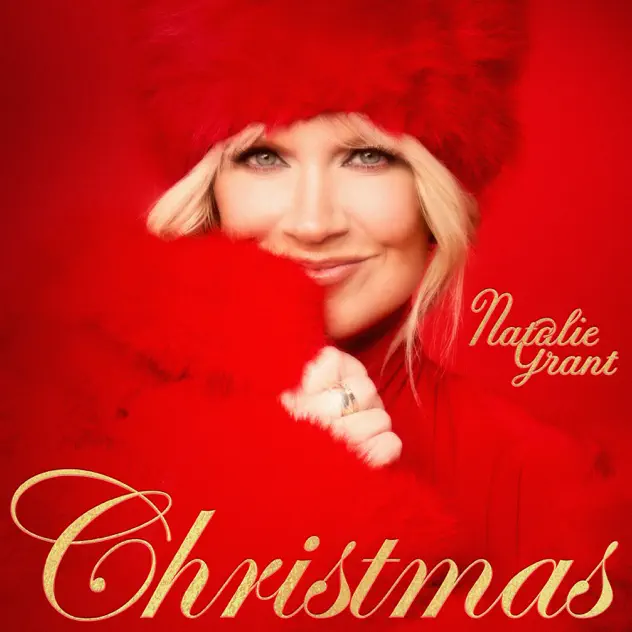
Natalie Grant - Hark! The Herald Angels Sing (Review)
| Artist: | Natalie Grant |
| Album: | Christmas |
| Release Date: | October 3, 2025 |
| Genre: | Christmas Carol, Gospel, Contemporary Christian |
| Original Author: | Charles Wesley (1739) |
| Original Composer: | Felix Mendelssohn (1840) |
| Stream/Buy: | Click here |
Review
"Hark! The Herald Angels Sing" stands as one of the most theologically rich moments on Natalie Grant's Christmas album. This isn't merely a performance of a beloved carol — it's a declaration of biblical truth wrapped in Grant's signature vocal power, bringing fresh urgency to words that have proclaimed the gospel for nearly three centuries.
Grant herself describes this as a gospel-infused interpretation, and that description proves remarkably accurate. Where many artists approach this carol with traditional reverence or contemporary polish, Grant brings something distinctly rooted in the African American gospel tradition — rich harmonies, dynamic vocal runs, and an emotional intensity that transforms hymn singing into testimony. This isn't background music for holiday gatherings; it's a proclamation demanding attention and response.
The history behind this carol adds profound depth to Grant's interpretation. Written by Charles Wesley in 1739, just a year after his conversion to Christianity, the hymn originally began with an obscure opening phrase about the welkin (an archaic term for the vault of heaven). It was Wesley's friend, the famous evangelist George Whitefield, who changed those opening words to the now-familiar declaration we know today. This wasn't merely editorial preference — Whitefield understood that making the message accessible was essential to effective proclamation.
The melody we recognize today came from an entirely unexpected source. Felix Mendelssohn composed it in 1840 for Festgesang, a cantata celebrating the 400th anniversary of Gutenberg's printing press — a thoroughly secular occasion. Mendelssohn himself, though a Christian, never intended his music for sacred purposes and reportedly believed it unsuitable for church use. Yet in 1856, over a century after Wesley penned the words, organist William H. Cummings heard something divine in Mendelssohn's melody and united it with Wesley's text, creating the version that has become one of the world's most beloved Christmas carols.
Grant's rendition honors this complex history while bringing her own artistry to bear. The production, helmed by her husband Bernie Herms, features the Nashville Recording Orchestra with string arrangements by David Hamilton — the same team responsible for the album's consistently excellent orchestration. Real instruments, real musicians, real voices — Grant's commitment to authentic production serves the carol's message beautifully. There's grandeur in the arrangement befitting the cosmic significance of what the words proclaim.
The theological weight of Wesley's words cannot be overstated. This isn't a sweet lullaby about baby Jesus; it's a comprehensive statement of incarnational theology packed into singable verses. The carol declares Christ as both fully divine and fully human, the reconciliation of God and sinners, the healing of broken humanity, and the promise of second birth for all who believe. Wesley, who wrote over 6,500 hymns during his lifetime, crafted something special here — doctrine made doxology, theology transformed into worship.
Grant's vocal interpretation brings particular power to these truths. When she proclaims that Christ is born in Bethlehem, there's conviction in her voice — this isn't ancient history but living reality. When she sings about the incarnate Deity, her delivery conveys wonder appropriate to such a mystery. And when she declares that Christ was born to give us second birth, the gospel message rings clear and urgent. This is evangelistic worship, inviting listeners not just to appreciate beautiful music but to respond to the truth being proclaimed.
The structure of Wesley's hymn builds brilliantly, and Grant's interpretation honors this progression. The first verse establishes the angelic announcement and calls for universal celebration. The second verse unpacks the theological significance — here is Christ, the everlasting Lord, taking on human flesh. The third verse (which many modern versions omit but Grant may include) addresses Christ as the Prince of Peace and Sun of Righteousness, with healing in His wings. Each verse adds another layer of understanding about who Jesus is and what His coming means for humanity.
One particularly powerful phrase that Grant brings to life is the declaration about reconciliation. The carol proclaims peace on earth not as wishful thinking but as accomplished fact — God and sinners reconciled through Christ. This is the heart of the Christmas message, the reason for celebration. Grant's delivery ensures listeners don't miss this central truth amid the beauty of melody and orchestration.
The gospel influence in Grant's arrangement manifests in several ways. There's call and response energy in how the vocals interact with the instrumentation. There are moments where Grant's voice breaks free from strict adherence to the written melody, adding embellishments and runs that express emotion words alone cannot capture. The rhythm has a slight swing that gives the carol forward momentum, creating an almost irresistible urge to move along with the music. This isn't stuffy or formal; it's celebratory and alive.
For Grant, recording this carol represented more than just covering a Christmas standard. It connected her to the musical heritage she grew up with — singing carols around the piano with her family in Seattle. But it also connected her to the larger story of Christian worship, joining her voice to the countless believers across nearly three centuries who have proclaimed these same truths. There's something profoundly beautiful about that continuity — past, present, and future believers united in declaring the good news of Christ's coming.
The production values match the significance of the message. The Nashville Recording Orchestra provides lush strings that add classical elegance without overwhelming the vocals. The rhythm section, featuring upright bass by Lyman Medeiros and drums by Bernie Dresel, provides a solid foundation that supports without distracting. Guitar work by Andrew Synowiec and piano by Josh Nelson add textural richness. Every element serves the whole, creating a sonic environment where Grant's vocals and Wesley's words can shine.
The engineering team deserves recognition as well. Recording engineers Danny Duncan and Steve Genewick captured the live orchestral performance with clarity and warmth. Mixing engineer Andy Selby balanced the complex arrangement while preserving the organic feel of real musicians playing together. Bob Boyd's mastering ensures the track sounds exceptional across all playback systems, from high-end audio equipment to smartphone speakers. The availability of high-resolution FLAC audio at 24-bit/48kHz allows audiophiles to hear every detail of this carefully crafted recording.
In the context of Grant's Christmas album, this track serves as a theological anchor. Between the playful swing of "Jingle Bells" and the contemporary originals, this historic carol grounds the project in the ancient-yet-ever-new story of God becoming flesh to dwell among us. It reminds listeners that Christmas traditions and family celebrations, while wonderful, find their ultimate meaning in the person and work of Jesus Christ.
For worship leaders and church musicians, Grant's version offers a model of how to honor tradition while bringing fresh energy to familiar material. The arrangement is complex enough to showcase excellent musicianship but accessible enough for congregational singing with proper adaptation. The gospel influences demonstrate that different cultural expressions of worship can illuminate different facets of biblical truth. And the vocal performance shows that excellence and emotion aren't mutually exclusive — great technique can serve great passion.
The broader cultural context makes this recording particularly significant. In an increasingly secular society where many people know Christmas carols only as nostalgic seasonal music divorced from religious meaning, Grant's interpretation refuses to let the message be domesticated. She sings these words as though they matter — because they do. The incarnation, God becoming human in Jesus Christ, remains the hinge point of history and the hope of humanity. Grant's rendition calls listeners to reckon with this reality rather than simply enjoying pleasant holiday sounds.
Wesley himself faced criticism during his lifetime for some of his hymn writing, particularly his willingness to include personal testimony and emotional expression in worship music. The religious establishment of 18th century England preferred more formal, detached hymnody. But Wesley understood that effective worship engages the whole person — mind, heart, and will. His hymns conveyed sound doctrine through accessible language and memorable melodies, making deep theology singable for common believers. Grant's approach carries forward that same vision — making profound truth accessible and engaging for contemporary listeners.
The carol's placement as the sixth track on Grant's album is strategically effective. Coming after both playful moments and deeply personal songs, it provides a moment of corporate worship and theological reflection. It invites listeners to step back from individual experience and join the global, multigenerational chorus of believers declaring Christ's glory. This movement from personal to corporate mirrors the structure of Christian community itself — individual testimonies finding their place within the larger story of God's redemptive work.
For those experiencing Christmas for the first time through Grant's album, this track offers an excellent introduction to the theological richness of the season. For longtime believers who have sung this carol countless times, Grant's fresh interpretation breathes new life into familiar words, helping them hear with renewed wonder truths that familiarity might have dulled. This dual effectiveness — reaching both new and mature believers — marks truly excellent worship music.
Grant's nine Grammy nominations and five Dove Awards for Female Vocalist of the Year testify to her consistent excellence across decades of ministry. But accolades aside, what makes her version of "Hark! The Herald Angels Sing" special is her evident love for both the message and the craft. She brings her full vocal power to bear in service of proclamation. She honors the historical legacy while making it contemporary. She maintains reverence while expressing joy. This balance is rare and precious.
As the Christmas season approaches and this carol echoes in churches, homes, and public spaces worldwide, Grant's recording offers something substantive amid the noise. It's a reminder that Christmas music at its best does more than create atmosphere — it proclaims truth, invites response, and points beyond itself to the One whose birth we celebrate. The herald angels' message hasn't changed in two millennia: glory to the newborn King, peace on earth, God and sinners reconciled through Jesus Christ.
A powerful, gospel-infused interpretation that honors the theological depth of Charles Wesley's historic hymn while bringing contemporary vocal excellence and orchestral grandeur to this timeless proclamation of Christ's incarnation — worship music at its finest.
Join Our Gospel Music Community
We share gospel music everyday on WhatsApp! If you'd like to be a part of it and receive daily inspirational worship songs, send a message on WhatsApp to get started.
Message on WhatsApp
0 Comments